Purple Yeti Water Bottle . Up to 10 cash back capless 32oz wide mouth tritan water bottle 1099. To get more choices, look at our. YETI Coolers YETI Rambler 18 oz. Peak Purple (Drinkware Bottle from www.houseofblades.com Yeti glitter tumbler glitter purple yeti tumbler yeti glitter personalized glitter yeti dipped yeti cup customized tumbler 30 oz. Purple yeti bottle | etsy australia. Our bottles are available in the following sizes:
How Does A Water Softner Work. It determines how to activate it by measuring the change in electrical conductivity of the resin bed or by measuring how much water you consume in general or either by detecting a change in the hardness of the water. How does water softener work?
How Water Softeners Work Explained With Diagrams from homewater101.com
The water that you use every day can be hard on both you and your house. Here’s how just one system can dramatically improve your water. This water softener diagram explains how a water softener basically works.
If You Require More Soft Water, Your System Will Make More, If You Do Not Need As Much, The Tank Will Be On Standby.
It softens the water by crushing the impurities, hard minerals and making the quality of water better for drinking and other purposes. Kinetico’s water softener systems are easy to use. The positive m and c ions attract to the negatively charged resin beads and do not continue on to your taps.
How Does A Water Softener Work?
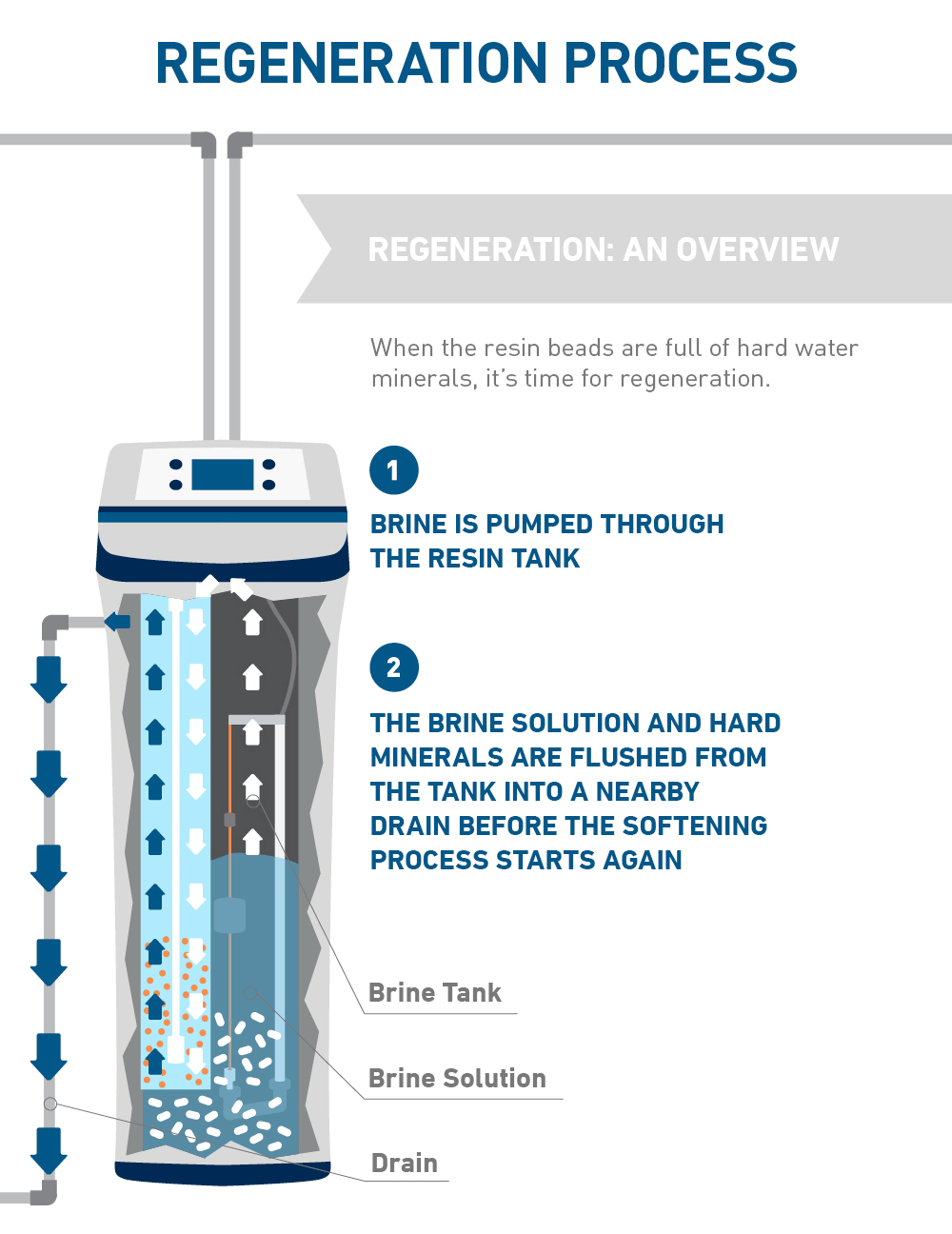
To make you understand even better, we will go through different. The salt mixes with water to create a brine solution that’s flushed through, and cleans the resin beads during regeneration. That’s why morton has a range of options to meet your needs.
Find Out In This Video!
How does a water softener work? This video by gary the water guy explains how a water softener works. This process continues as you use the softened water.
Harvey™ Block Salt Is Dissolved And The Brine Solution Used To Regenerate (Clean) The Resin Tanks.
Recharging the mineral tank with sodium from the brine solution displaces calcium and magnesium, which is then. This process requires exchanging positively charged mineral ions in the hard water with positively charged sodium ions, leaving the water coming out of the system free of mineral ions. This is because they do not actually remove minerals from water, meaning water is still.
How Does A Water Softener Work:
This post may contain amazon affiliate links and as an amazon associate i earn from qualifying purchases. The hard water then flows through the mineral tank’s resin beads, which are typically made. The mineral tank contains resin beads that are inundated with salt from the brine tank.


Comments
Post a Comment